Imagine Controlling Your Smart Home With Just a Thought — It’s Closer Than You Think
Imagine: you sit on the couch, think „lights off” — and the living room goes dark. No button, no voice command, no tapping on the phone. Just a thought.
Sounds like science fiction? Maybe — but the building blocks already exist, and they’re growing faster than most people think.
Where we stand today
Worldwide, around 150 people currently carry a tiny implant in their head that translates thoughts into computer commands. Two years ago it was 67. Most of them have injuries or diseases like ALS that took away their speech or movement. With the implant they can now:
- Speak again — through a cloned version of their own voice from old recordings
- Surf the web, write emails, hold jobs
- Read bedtime stories to their kids
Companies like Neuralink (21 implants in 2 years), Synchron, and the Chinese Neuracle (first country with medical approval) are pushing this hard right now. What was a research curiosity a few years ago is becoming clinical reality.
The thought experiment: a smart home controlled by thought
Let’s extrapolate. In 5 to 10 years this technology could be miniaturized and safe enough that even healthy people will want it. Not out of medical necessity — but out of convenience. The way some people wear a smartwatch today.
What would that mean for our smart home?
Level 1: Switches become obsolete
Today I say „Alexa, lights off” or tap a scene in the dashboard. Both are already pretty good — but both are a conscious act. With thought control, the lights would adjust as soon as I think about it. No voice command waking up the kids. No phone in my hand during movie night.
Level 2: The house reads your mood
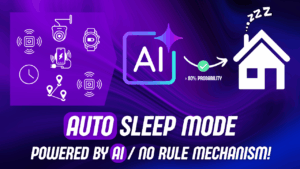
Here it gets interesting. The technology reads not only explicit „commands” but also what you’re feeling right now. Stressed? The living room dims and the vacuum robot pauses. Tired? The bedroom shifts to „sleep mode” — blinds down, temperature down, quiet favorite music. Today I need routines, sensors, and a bit of luck. Tomorrow maybe just one sensor: your head.
Level 3: You are the smart home hub
That’s the most radical step. Today my automations run through Home Assistant, n8n, and voice assistants. The logic lives on the server. Far in the future, the logic could partially live in your head — and the house is just a set of execution organs. You think „espresso”, the machine runs. You think „put the kids to bed”, the whole evening routine starts.
The honest downside
As exciting as this is — let’s not ignore how much can go wrong:
- Privacy on a whole new level. A switch doesn’t know how you feel. An implant does.
- Who controls the data? If the smart home reacts to mood, that mood also lands on some server.
- Security / hacking. Whoever hacks the implant, hacks you.
- Social divide. First the sick, then the rich, then the rest.
I’m a tech optimist, not a blind one. We should start thinking today about what rules we want — before the technology writes the rules for us.
What does this mean for us makers today?
Nothing concrete. You can’t get an implant tomorrow that controls your living room. But take away two things:
- The direction is clear. Control gets more invisible, closer to the human, less explicit. Voice was level 1. Thoughts are level 2.
- Build a smart home today that works without your intervention. Routines, presence detection, learning automations. Anyone who still switches everything through an app today will look in ten years like someone writing an SMS to call a taxi.
Source for the current numbers: MIT Technology Review.

Leave a Reply