// Short Posts

Quick updates, thoughts and discoveries from the smart home world.

2 years ago

An LED Matrix Built With WLED

Not every smart home project has to be useful. This one is mostly about how the room looks.

I built an LED matrix, a grid of individually addressable lights, and drive it with WLED, free software for controlling LED strips and panels.

It sits on the wall and does its thing, and the effect is far nicer than I expected from a handful of small lights.

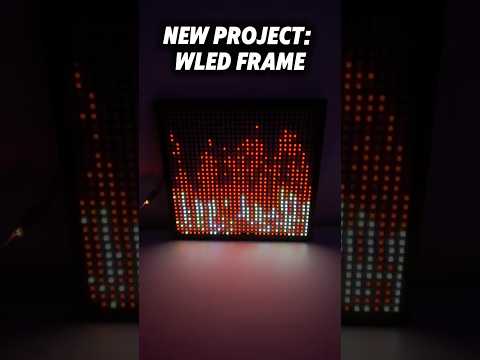
An LED Matrix Built With WLED
2 years ago

The LED Panel I Finally Built

This project sat on my list for years. Every time I saw someone else’s glowing wall panel I thought about it again, and then put it off.

It is finally built and hanging on the wall. Seeing the thing actually running, instead of picturing how it might look, turned out to be worth the long delay.

This is a short look at the finished result, nothing more than that.

The LED Panel I Finally Built
2 years ago

One Simple Automation I Use Daily

The automations I like best are rarely the complicated ones. They are the small routines that quietly remove a bit of friction every day.

This is one of my favourites, and I walk through what it does and why it is set up the way it is.

No special hardware, no clever trick. Just a rule that has kept working without me thinking about it.

One Simple Automation I Use Daily
2 years ago

A Basic Automation That Genuinely Helps

People often assume a smart home needs elaborate logic before it pays off. My experience is the opposite.

I built this one in Home Assistant, the open-source platform I use to tie my devices together, and it is about as plain as an automation gets.

It just makes an everyday moment slightly easier, and that is the whole point. Simple things are the ones that survive.

A Basic Automation That Genuinely Helps
2 years ago

Reaching The Top Of An iPhone Screen

Phone screens keep growing, and the top row of icons has drifted out of thumb range for anyone holding the device in one hand.

iPhones have a built-in answer for that: a gesture that slides the whole screen downwards so the upper half comes to you.

It is not a secret feature, but plenty of people have never come across it. From an interface design point of view it is a neat piece of problem solving.

Reaching The Top Of An iPhone Screen
2 years ago

My DIY Remote Now Sends Infrared

The self-built remote I have been working on took another step forward: it can now send infrared signals as well.

That matters because plenty of older devices in a living room still only listen to the same invisible light pulses a classic remote uses.

So one handmade device covers both the modern connected gear and the equipment that never became smart in the first place.

My DIY Remote Now Sends Infrared
2 years ago

An AI-Written Diary Of Our Family Week

Weeks go by and the small everyday moments blur together. I wanted a record of them without having to sit down and write one.

So I have generative AI, software that produces text on its own, pull together what happened in the family over the past week or month and turn it into a diary entry.

The result is a running log of ordinary family life that writes itself while we get on with things.

An AI-Written Diary Of Our Family Week
2 years ago

Music My House Generates Every Day

Instead of a fixed playlist, my home now produces fresh music of its own each day.

A generative AI creates the tracks, and what it makes depends on the situation: who is currently at home and which scene, meaning which preset mood or setting, is active at that moment.

The soundtrack is therefore never quite the same twice, and it shifts with the room rather than looping in the background.

Music My House Generates Every Day
2 years ago

Letting My Home Suggest Tonight’s Dinner

Deciding what to cook is one of those daily questions that eats more energy than it should.

So I handed it over. A generative AI, meaning software that comes up with content by itself, proposes the menu, and the suggestion is waiting when we get home.

It does not cook anything, but it takes the blank-page moment out of dinner planning. Ignoring the suggestion is always an option.

Letting My Home Suggest Tonight’s Dinner
2 years ago

A Daily Summary Of My Smart Home

Once enough automations are running, it gets hard to say what the house actually did all day.

I now have a generative AI write a short recap of the previous day, so all those background routines become readable in one place.

The useful part is what stands out: anything unusual or out of pattern shows up in the summary instead of staying buried in the logs.

A Daily Summary Of My Smart Home
2 years ago

Letting AI Propose New Home Automations

After a while you run out of ideas for what else could be automated in a house. That is where I got some outside input.

I asked a generative AI to look at my setup in Home Assistant, the open-source system running my devices, and suggest automations I had not thought of.

Not every proposal was worth building, but a few were genuinely clever and gave me a fresh angle on rooms I thought were finished.

Letting AI Propose New Home Automations
2 years ago

AI Wall Art That Fits The Moment

Empty walls were the last thing in the house that never changed. Framed prints stay the same for years.

Now the pictures are generated by AI and adapt to the context of the moment, so what hangs there is never fixed for long.

It ends up somewhere between decoration and an ongoing experiment, and the house feels less static because of it.

AI Wall Art That Fits The Moment
2 years ago

Bedtime Stories With A Little AI Help

Making up a new bedtime story every evening is harder than it sounds, especially when the day has already been long.

Generative AI turned out to be a decent co-author here. It can help shape a fairy tale, spin a story around something the kids actually did that day, or take over the whole thing.

The telling stays with me. The blank moment at the start of the story is what disappears.

Bedtime Stories With A Little AI Help
2 years ago

Finding Lost Things With Image AI

Losing something inside your own home is a particular kind of annoying, because you know it is there somewhere.

I put generative AI to work on the camera images from the house. It can recognise objects and people in a picture, which makes it possible to ask where something was last seen.

It started as a security experiment and turned into something closer to a search function for the household.

Finding Lost Things With Image AI
2 years ago

When My Home’s AI Started Cracking Jokes

I gave the notifications in my house a sense of humour. Push messages and spoken announcements were written by a generative AI with instructions to be funny.

Some of them landed. Others were the kind of joke that is only amusing to the person who set it up.

My wife was noticeably less delighted by the experiment than I was, which is probably a fair review in itself.

When My Home’s AI Started Cracking Jokes
2 years ago

Morning Briefings When I Enter The Room

The first minutes of the day are when a short, well-timed piece of information is worth the most.

My house now greets me with a personalised message the moment I walk into a particular room. Presence detection recognises that someone has entered, and that triggers it.

The text is put together by AI from the data my Home Assistant setup already collects, so the briefing reflects the actual state of the house rather than a canned phrase.

Morning Briefings When I Enter The Room
2 years ago

Ten AI Ideas For The Connected Home

This is the opening piece of a series in which I go through ten ways generative AI can change how a home behaves.

The common thread is that all of it runs on top of a normal automation platform such as Home Assistant, so these are ideas anyone with an existing setup could try.

Some are practical, others are closer to playing around. Together they give a decent picture of what is already possible today.

Ten AI Ideas For The Connected Home
2 years ago

Twenty Thousand Subscribers, Briefly Celebrated

A number went past that I honestly did not expect when I started posting my projects: twenty thousand subscribers.

Behind that figure are a lot of people who watch someone solder, wire and occasionally get things wrong, and who stick around anyway. That is not something I take for granted.

So this is a short thank-you to everyone who has been following along, and then it is straight back to the workbench and the next unfinished project.

Twenty Thousand Subscribers, Briefly Celebrated
2 years ago

A Self-Built NFC Tag Door Opener

Keys are the one part of the house that never got any smarter, so I built my own way around them.

Holding an NFC tag against the reader opens the door. NFC works over a few centimetres, the same contactless technology used when paying with a card.

The tag itself is small enough to disappear into a pocket, and there is nothing to charge or unlock first.

A Self-Built NFC Tag Door Opener
2 years ago

Voice Satellites: Building Versus Buying

A voice satellite is the small box in a room that listens for a spoken command and passes it to the system running the house.

You can build one yourself or buy a ready-made unit, and I put the two options side by side.

The honest answer is that it depends on how much of your evening you want to spend on it, and I go through what each way actually costs you in effort.

Voice Satellites: Building Versus Buying

Stay in the loop

Like building smart home stuff that actually works? Join The Smart Home Maker newsletter. No fluff, no spam - just real projects, honest failures, and code you can actually use.

Or follow me on:

YouTube