Giving Your Smart Home Extra Abilities
A standard setup switches lights and reads sensors. With a bit of extra work it can do considerably more than that.
In this clip I go through the additions that made the biggest difference in my own house, the ones that turned a collection of devices into something that feels coordinated.
None of it requires starting over. Each piece can be added to what is already running.
A Traffic Light For Solar Powered Laundry
When the panels on the roof produce more than the house consumes, the surplus goes to the grid. It is worth more to me if I use it right away.
So I built a dashboard that tracks production and consumption live, driven by an ESP32, a small cheap microcontroller, together with ESPHome and Home Assistant, the software running my house.
The result is deliberately simple: a traffic light that tells me whether now is a good moment to run the washing machine or dryer, or whether it is better to wait.
Reading a number is optional. Glancing at a colour takes a second.
Spotting Water Peaks In The House
Instead of looking at how much water is used in total, I look at how quickly it flows. That single change makes patterns visible.
A shower shows up as a clear peak. Something that keeps running when nobody is home shows up too, and that is the case worth catching early.
Simple analysis, useful result, and no extra plumbing involved.
Finding A Lost Laptop With Camera Snapshots
Searching the house for a misplaced laptop is a waste of an afternoon, so I let the cameras do the looking.
Snapshots go to Ollama, a tool that runs image analysis locally rather than in someone else’s cloud. It checks whether the object appears in the picture.
What comes back is a plain sentence about where the thing is, for example that the laptop is on the table.
The same principle works for other items you routinely put down and then cannot find.
Controlling My Home Through Smart Glasses
My Ray-Ban Meta glasses can send messages, so I gave them something useful to talk to: a chatbot on WhatsApp that sits between me and my home.
The bot passes what I say along to Home Assistant, the open-source software that runs all my devices. Speaking a request out loud is enough to trigger it.
The nice part is that nothing new had to be worn or carried. The glasses were already on my face, and the messaging app was already there.
A Bottle Opener That Talks To My Home
Some gadgets exist purely because someone could build them. This one opens bottles and connects to a home automation system over Matter, the shared standard that lets devices from different brands work together.
So yes, a beer can now be opened at the press of a button, and the rest of the house knows about it.
Whether anyone actually needs that is a separate question. I found it absurd enough to be worth showing.
Unlocking Cupboards With My Smartwatch
Magnetic child locks are safe, but hunting for the little magnet every single time got old fast. So I automated the locks instead.
Now the cupboard opens from my smartwatch or phone, or by holding an NFC tag against it. NFC is the same short-range contact technology used for card payments.
It keeps the kids out of the drawers they shouldn’t reach, and it doubles as one more small security layer in the house.
An LED Matrix Built With WLED
Not every smart home project has to be useful. This one is mostly about how the room looks.
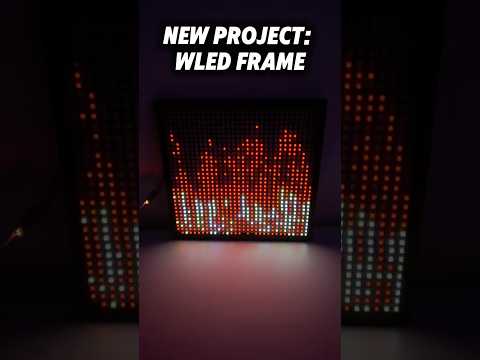
I built an LED matrix, a grid of individually addressable lights, and drive it with WLED, free software for controlling LED strips and panels.
It sits on the wall and does its thing, and the effect is far nicer than I expected from a handful of small lights.
The LED Panel I Finally Built
This project sat on my list for years. Every time I saw someone else’s glowing wall panel I thought about it again, and then put it off.
It is finally built and hanging on the wall. Seeing the thing actually running, instead of picturing how it might look, turned out to be worth the long delay.
This is a short look at the finished result, nothing more than that.
One Simple Automation I Use Daily
The automations I like best are rarely the complicated ones. They are the small routines that quietly remove a bit of friction every day.
This is one of my favourites, and I walk through what it does and why it is set up the way it is.
No special hardware, no clever trick. Just a rule that has kept working without me thinking about it.
A Basic Automation That Genuinely Helps
People often assume a smart home needs elaborate logic before it pays off. My experience is the opposite.
I built this one in Home Assistant, the open-source platform I use to tie my devices together, and it is about as plain as an automation gets.
It just makes an everyday moment slightly easier, and that is the whole point. Simple things are the ones that survive.
Reaching The Top Of An iPhone Screen
Phone screens keep growing, and the top row of icons has drifted out of thumb range for anyone holding the device in one hand.
iPhones have a built-in answer for that: a gesture that slides the whole screen downwards so the upper half comes to you.
It is not a secret feature, but plenty of people have never come across it. From an interface design point of view it is a neat piece of problem solving.
My DIY Remote Now Sends Infrared
The self-built remote I have been working on took another step forward: it can now send infrared signals as well.
That matters because plenty of older devices in a living room still only listen to the same invisible light pulses a classic remote uses.
So one handmade device covers both the modern connected gear and the equipment that never became smart in the first place.
An AI-Written Diary Of Our Family Week
Weeks go by and the small everyday moments blur together. I wanted a record of them without having to sit down and write one.
So I have generative AI, software that produces text on its own, pull together what happened in the family over the past week or month and turn it into a diary entry.
The result is a running log of ordinary family life that writes itself while we get on with things.
Music My House Generates Every Day
Instead of a fixed playlist, my home now produces fresh music of its own each day.
A generative AI creates the tracks, and what it makes depends on the situation: who is currently at home and which scene, meaning which preset mood or setting, is active at that moment.
The soundtrack is therefore never quite the same twice, and it shifts with the room rather than looping in the background.
Letting My Home Suggest Tonight’s Dinner
Deciding what to cook is one of those daily questions that eats more energy than it should.
So I handed it over. A generative AI, meaning software that comes up with content by itself, proposes the menu, and the suggestion is waiting when we get home.
It does not cook anything, but it takes the blank-page moment out of dinner planning. Ignoring the suggestion is always an option.
A Daily Summary Of My Smart Home
Once enough automations are running, it gets hard to say what the house actually did all day.
I now have a generative AI write a short recap of the previous day, so all those background routines become readable in one place.
The useful part is what stands out: anything unusual or out of pattern shows up in the summary instead of staying buried in the logs.
Letting AI Propose New Home Automations
After a while you run out of ideas for what else could be automated in a house. That is where I got some outside input.
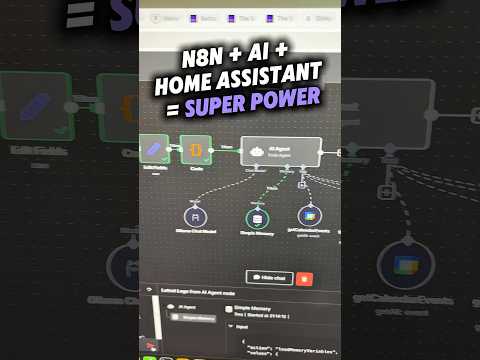
I asked a generative AI to look at my setup in Home Assistant, the open-source system running my devices, and suggest automations I had not thought of.
Not every proposal was worth building, but a few were genuinely clever and gave me a fresh angle on rooms I thought were finished.
AI Wall Art That Fits The Moment
Empty walls were the last thing in the house that never changed. Framed prints stay the same for years.
Now the pictures are generated by AI and adapt to the context of the moment, so what hangs there is never fixed for long.
It ends up somewhere between decoration and an ongoing experiment, and the house feels less static because of it.
Bedtime Stories With A Little AI Help
Making up a new bedtime story every evening is harder than it sounds, especially when the day has already been long.
Generative AI turned out to be a decent co-author here. It can help shape a fairy tale, spin a story around something the kids actually did that day, or take over the whole thing.
The telling stays with me. The blank moment at the start of the story is what disappears.